MarketsExplainer
How interest rate increases affect stock market valuations
When the Federal Reserve raises interest rates, stock valuations fall through the mathematics of present value—even if company earnings are strong.
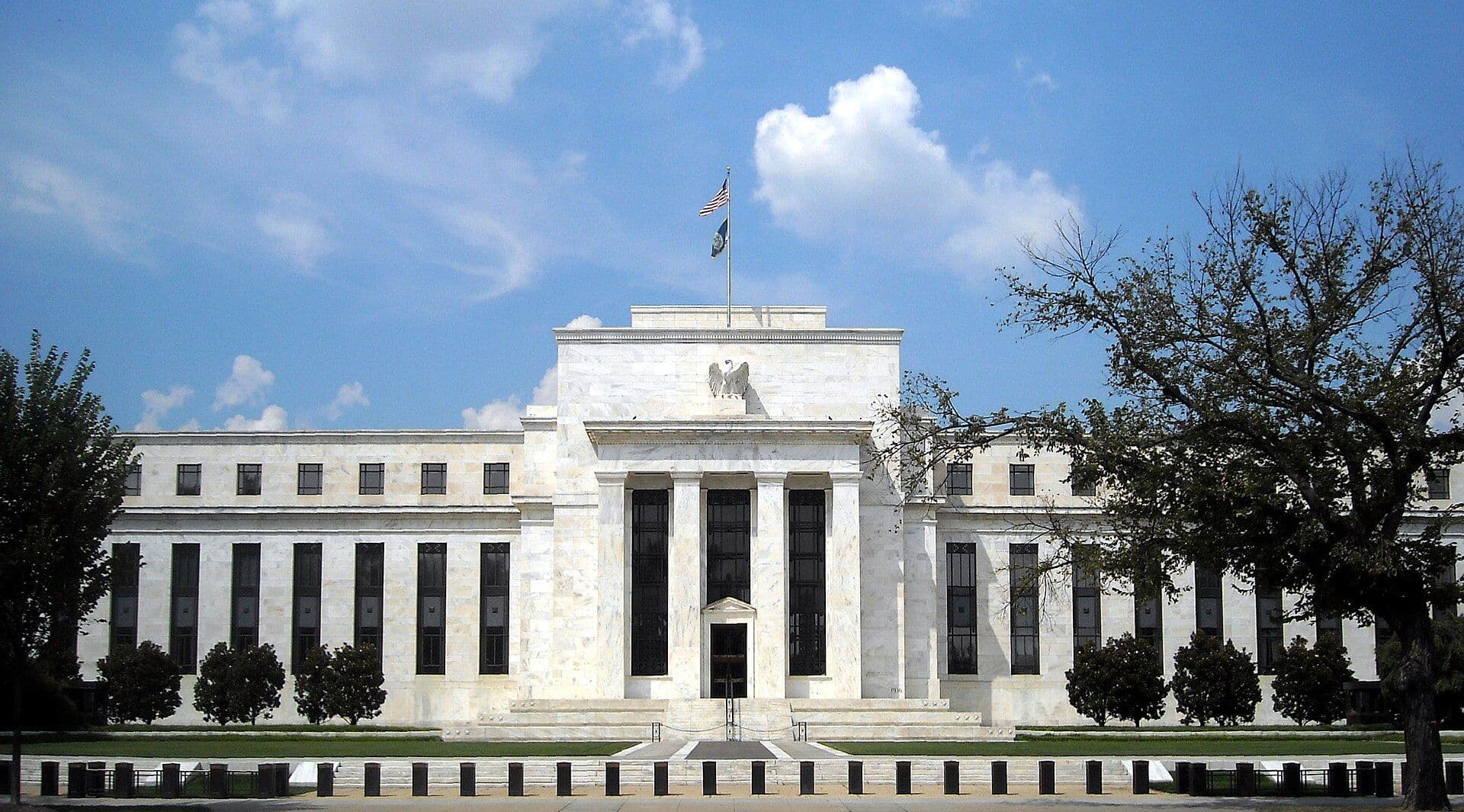
When the Federal Reserve raises interest rates, stock prices often fall—even if companies are making more money. This counterintuitive relationship confuses many investors. The link runs through a mathematical mechanism that connects what the Fed does to what investors will pay for a share of stock. On September 16, 2026, the Fed raised its benchmark interest rate by 0.25 percentage points to a range of 3.75% to 4.00%, the first increase in more than three years. Understanding how this move affects stock valuations requires understanding the discount rate: the tool that transforms a company's future earnings into a price investors will pay today.
Every stock valuation rests on a simple idea: a share is worth the present value of all its future earnings. But that phrase—"present value"—contains the mechanism that links Fed policy to stock prices. When interest rates change, the discount rate used to calculate present value changes with them. That tiny change in the math can produce enormous moves in what investors will pay for stocks.
The present value mechanism
Stock valuations rest on the formula: Present Value = Cash Flow / (1 + Discount Rate)^Years. The discount rate is the interest rate investors use to convert future dollars into today's dollars. As the discount rate rises, future cash flows become worth less in today's money. A simple example shows the magnitude: moving the discount rate from 8% to 9% cuts a stock's calculated value by 16.7%. Moving it from 8% to 7% raises it by 25%, according to Masterworks Academy. The effect is not linear because the rate compounds across years, and in valuation models, the discount rate sits close to the growth rate itself, creating a thin denominator where small movements produce outsized percentage swings.
The discount rate investors use includes the risk-free rate—essentially what the U.S. Treasury pays on government bonds, which moves with Federal Reserve policy. When the Fed raises rates, Treasury yields rise, and the risk-free rate component of the discount rate rises with them. The present value of future earnings mechanically falls, even if those earnings remain unchanged.
The September 2026 rate increase and market response
On September 16, 2026, the Federal Reserve raised the federal funds rate by 25 basis points to a target range of 3.75% to 4.00%, according to St. Louis Fed data. This was the first rate increase in more than three years. The move reflected persistent inflation above the Fed's 2% target, according to the Federal Open Market Committee's July 2026 minutes.
Each quarter-point increase mechanically increases the discount rate and compresses the present value of future corporate earnings.
Duration and sector sensitivity
Not all stocks respond equally to rate changes. The impact depends on when a company is expected to earn its profits. A company that makes most of its money in the next two years suffers less when rates rise than a company whose profits are expected largely a decade from now. Growth stocks and technology companies, which assume most earnings will arrive years in the future, experience larger valuation pressure. Stocks with near-term earnings are less sensitive because the discount rate effect compounds less across time.
The 2022 example illustrates this. When the Federal Reserve raised rates by over 400 basis points in that year, the Nasdaq Composite, which is heavily weighted toward longer-duration tech stocks, fell approximately 33%, according to Masterworks Academy. Over the same period, earnings continued growing. The valuation multiple compressed because the denominator—the discount rate—had changed, not because company fundamentals had deteriorated. This shows that rate moves can drive stock price movements independent of earnings changes.
The earnings offset
Higher interest rates do not automatically mean lower stock prices because earnings themselves can move. When the Fed raises rates to fight inflation, economic growth can slow, weighing on corporate profits. That typically leads to further price declines. But when the economy remains strong—as it was when the Fed raised rates in September 2026 amid "solid pace" of economic expansion, according to FOMC minutes—corporate earnings can continue growing despite higher rates. U.S. Bank research notes that "solid corporate earnings growth supports equity prices" even when rates remain elevated. This means a rising rate environment can produce mixed results: the discount rate mechanic pushes valuations down, but strong earnings can push prices up. The net effect depends on which force is stronger at any moment.
Implications for portfolio strategy
For investors, Fed rate increases create both mechanical headwinds and potential opportunities. The mechanical headwind is clear: higher rates lower the present value of all future cash flows. But the relationship between rates and stock returns is not a straight line. Investors adjusting portfolios in response to Fed policy tend to focus on three factors: the level of interest rates, expectations for future rate moves, and the earnings growth available at current prices.
When rates begin rising from low levels—as happened in September 2026 after three years at 3.5%—the impact on valuations depends partly on what comes next. If markets expect rates to stabilize after one or two increases, the repricing may be limited. If markets expect sustained higher rates, repricing will be sharper and last longer. Investors also watch whether rising rates are being driven by strong growth (which can support earnings) or by inflation that the Fed is trying to suppress. Growth-driven rate increases are less damaging to stock returns than inflation-driven increases, because earnings growth can offset the valuation compression.
The current environment presents both risks and opportunities. Valuations at the S&P 500 are elevated by historical standards even as rates are rising from cyclically low levels. Further rate increases could compress multiples further, but the path of interest rates, economic growth, and corporate earnings will ultimately determine returns.