IndustriesExplainer
How utilities balance rising electricity demand against grid constraints
Data center growth is accelerating electricity demand faster than utilities can build transmission and generation. Utilities face a 2030 reliability risk if infrastructure doesn't keep pace.
U.S. electricity demand is accelerating at an unprecedented pace. Over the past five years, consumption has grown at an average of 2.1% annually, according to the Energy Information Administration's 2026 Annual Energy Outlook. This represents a dramatic departure from the previous 15 years of near-flat consumption. The EIA projects that electricity consumption will grow at a baseline rate of 0.9% to 1.6% annually through 2050, but recent growth patterns suggest demand could exceed even these elevated forecasts. The EIA projects consumption will grow 2% in both 2026 and 2027 alone.
Data centers are the primary driver of this acceleration. As the EIA's 2026 Annual Energy Outlook notes, commercial buildings—which house data center operations—are expected to experience faster energy consumption growth than residential or industrial sectors across all scenarios. This represents a structural shift in how utilities must plan infrastructure. Rather than a gradual, predictable increase, utilities now face demand that can surge rapidly in specific geographic locations. This concentration creates infrastructure bottlenecks: utilities must add generation capacity, build transmission lines to move electricity across regions, and connect new power sources through interconnection processes. All three are constrained, and the gaps between rising demand and available infrastructure are widening.
How capacity markets work
Electricity systems must have enough generation capacity to meet peak demand plus a buffer for reliability. Utilities ensure adequate supply through capacity markets, where generators bid to provide power during future periods. PJM, the regional grid operator serving 13 states and the District of Columbia, procured 138,318 megawatts of generation resources in its 2026 capacity auction held in July 2026. This procurement covers generation available during the 2026-2027 summer period, when demand peaks.
The capacity auction is forward-looking: utilities contract for power years in advance because new plants take time to build. The auction process allows utilities to secure commitments from both existing generators and new projects, ensuring supply will be available when needed. However, capacity procurement alone is insufficient. Electricity must physically move from where it is generated—often in remote areas with cheap fuel or high wind resources—to where it is consumed in population centers. That requires transmission infrastructure.
The transmission bottleneck
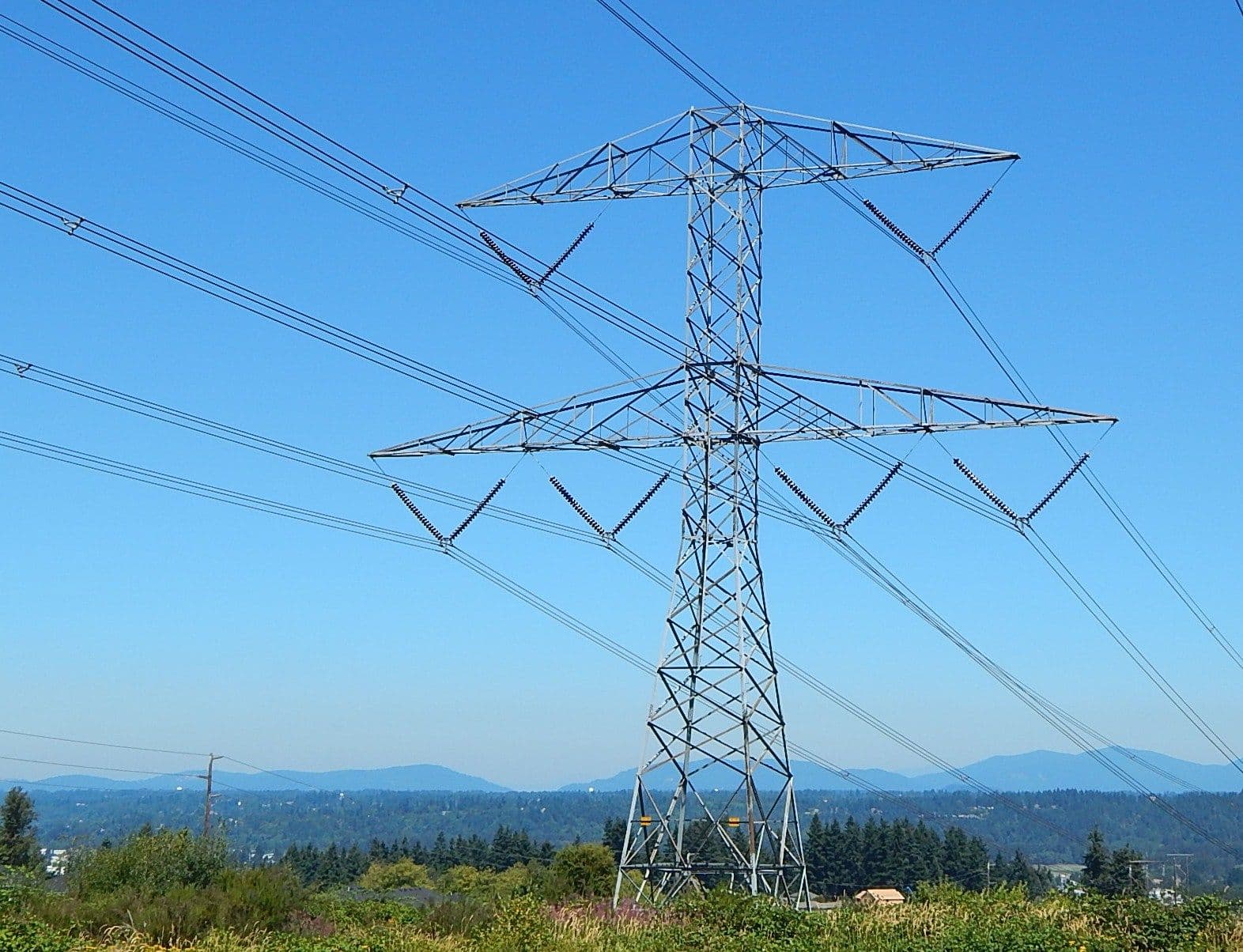
Transmission lines are the interstate highways of electricity. They move power from generation facilities across regions to local distribution networks. Yet building transmission takes far longer than adding generation. Utilities must navigate environmental review, permitting, land acquisition, and construction. CAISO, California's grid operator, conducts transmission planning to identify grid expansion needs and recently initiated its 2026-2027 transmission planning process to address growing demand.
While utilities plan new transmission, existing lines face growing congestion. Locational pricing reflects this: electricity costs more in areas with limited transmission capacity relative to local demand. Utilities are attempting to keep pace. Recent data from the EIA's Electric Power Monthly shows that solar generation has grown dramatically—approximately 22% year-over-year from June 2025 to June 2026, reaching 426 billion megawatthours in the rolling 12-month period ending June 2026. Nationally, solar is projected to grow 21% annually. Yet solar and wind generation are often located far from major population centers, requiring transmission to deliver power. The gap between available transmission capacity and the power that needs to move has widened.
This creates a vicious circle for utilities: they need transmission to move renewable power from remote areas, but transmission takes years to permit and build. Meanwhile, data center demand is concentrated in specific metropolitan areas, requiring substantial local generation or transmission imports. Utilities cannot build fast enough to prevent occasional periods where demand exceeds readily available supply.
Interconnection queues and delays
Before a new generator can provide power to the grid, it must go through the interconnection process. This formal procedure ensures that new generation does not destabilize the system or overload existing transmission. PJM reformed its interconnection process in recent years to accelerate approvals, and announced in August 2026 that it accepted over 700 new generation projects in the first cycle of the reformed process. This acceleration reflects the urgency of adding generation capacity.
Yet even with reformed processes, interconnection creates bottlenecks. Each new project requires engineering studies to model how it will interact with existing infrastructure. When hundreds of projects queue simultaneously, these studies create backlogs that can delay a project's operation by several years. Developers must wait for their turn in the study queue, even if the project is otherwise approved. This timing lag means that even when utilities auction capacity commitments and secure generation resources, those resources may not be available for years due to interconnection delays.
Regional operators monitor this challenge closely. ISO New England, which operates the grid in New England, maintains real-time system data showing currently available capacity—at one recent snapshot, 16,741 megawatts—alongside forecasted peak demand. The operator publishes 7-day capacity forecasts, 3-day demand projections, 21-day energy assessments, and seasonal outlooks to track whether capacity will be adequate. These forecasts help utilities identify months or seasons when supply might be tight, but they cannot solve the underlying problem: if new generation projects are delayed in interconnection queues, capacity will remain constrained regardless of forecasts.
The regional reliability crisis
Some regions face acute timeline pressures. A Pennsylvania utility regulator commissioned study warns that PJM faces a potential reliability crisis by 2030 if data center load growth continues at current rates. The study describes the challenge in stark terms: in a worst-case scenario where data center expansion accelerates, the region's loss of load expectation—the metric utilities use to measure blackout risk—would be "over 100 times worse than PJM's planning criterion." To put this in perspective, PJM's planning criterion typically allows blackout risks measured in hours per decade. A 100-fold increase would mean potential blackout days annually.
This outcome is not inevitable. It depends on whether utilities can add generation and transmission capacity faster than demand grows. But the study highlights the central tension utilities face: data center operators can decide to locate a facility in a region and require power within 18 months, while utilities need five to seven years to build transmission and three to four years to add generation capacity. If that gap widens, some regions will face genuine supply shortages during peak periods.
The risk is especially acute in regions like the Mid-Atlantic, where PJM operates. The region has an aging coal fleet—coal generation in the 12-month period ending June 2025 was approximately 703 billion megawatthours, declining to approximately 697 billion megawatthours in the 12-month period ending June 2026, according to EIA data. Utilities are replacing coal plants with natural gas and renewables, but the transition is not instantaneous. Meanwhile, data center demand is surging in the same region due to proximity to East Coast population centers and existing fiber infrastructure.
How utilities charge for growing demand
Utilities are adjusting rate structures to reflect the infrastructure costs of serving large, growing loads like data centers. Traditionally, utilities charged based on kilowatt-hours consumed, spreading infrastructure costs across all customers. Under this model, a data center that requires massive transmission expansion would trigger those costs to be paid by residential customers and other small users as well.
Many utilities now require upfront payments, exit fees, and ramp schedules for large industrial customers, particularly data centers. An upfront payment covers the cost of infrastructure—transmission, generation, and distribution—needed to serve that specific customer. A ramp schedule sets gradual load growth expectations, giving utilities time to build capacity. Exit fees discourage customers from leaving quickly, which would leave stranded infrastructure costs.
These tariff changes reflect a fundamental reality: large loads are no longer incremental. They require specific, large-scale infrastructure that cannot serve other customers. A transmission line built primarily to serve a data center is sized for that use; if the customer leaves, the capacity goes unused. By pricing large loads to reflect their true infrastructure costs, utilities ensure that these loads pay for what they require rather than shifting costs to other customers. This also signals to data center operators the true cost of rapid expansion, potentially moderating the pace of growth.
The infrastructure timeline problem
The fundamental constraint utilities face is that electricity infrastructure takes years to build while demand can materialize quickly. Yet data center operators can decide to locate a facility and require power within 18 months.
This timing gap creates a window where demand growth could outpace infrastructure additions. Utilities, regulators, and policymakers are attempting to close that gap by accelerating permitting processes, streamlining interconnection procedures, and securing capital for transmission projects. Several states have reformed environmental review timelines for energy infrastructure. Utilities are also deploying battery storage—fast to install—alongside longer-term transmission and generation investments.
The Department of Energy supports efforts to strengthen energy systems through smart grid technology and energy storage solutions, particularly as demand and renewable energy integration increase. Yet even with acceleration, infrastructure cannot expand instantly. Over the next three to five years, utilities will likely face periods where demand growth outpaces supply additions. How utilities, regulators, and policymakers manage that gap—whether through demand response programs, temporary price spikes, or actual supply shortages—will determine whether rising electricity demand can be met reliably or whether some regions face genuine infrastructure constraints.