
Explainer
What's Stalling Congress's Dozen Spending Bills Before December 11
None of the 12 full-year fiscal 2027 spending bills has passed. A fight over defense versus nondefense funding is holding up the Senate.
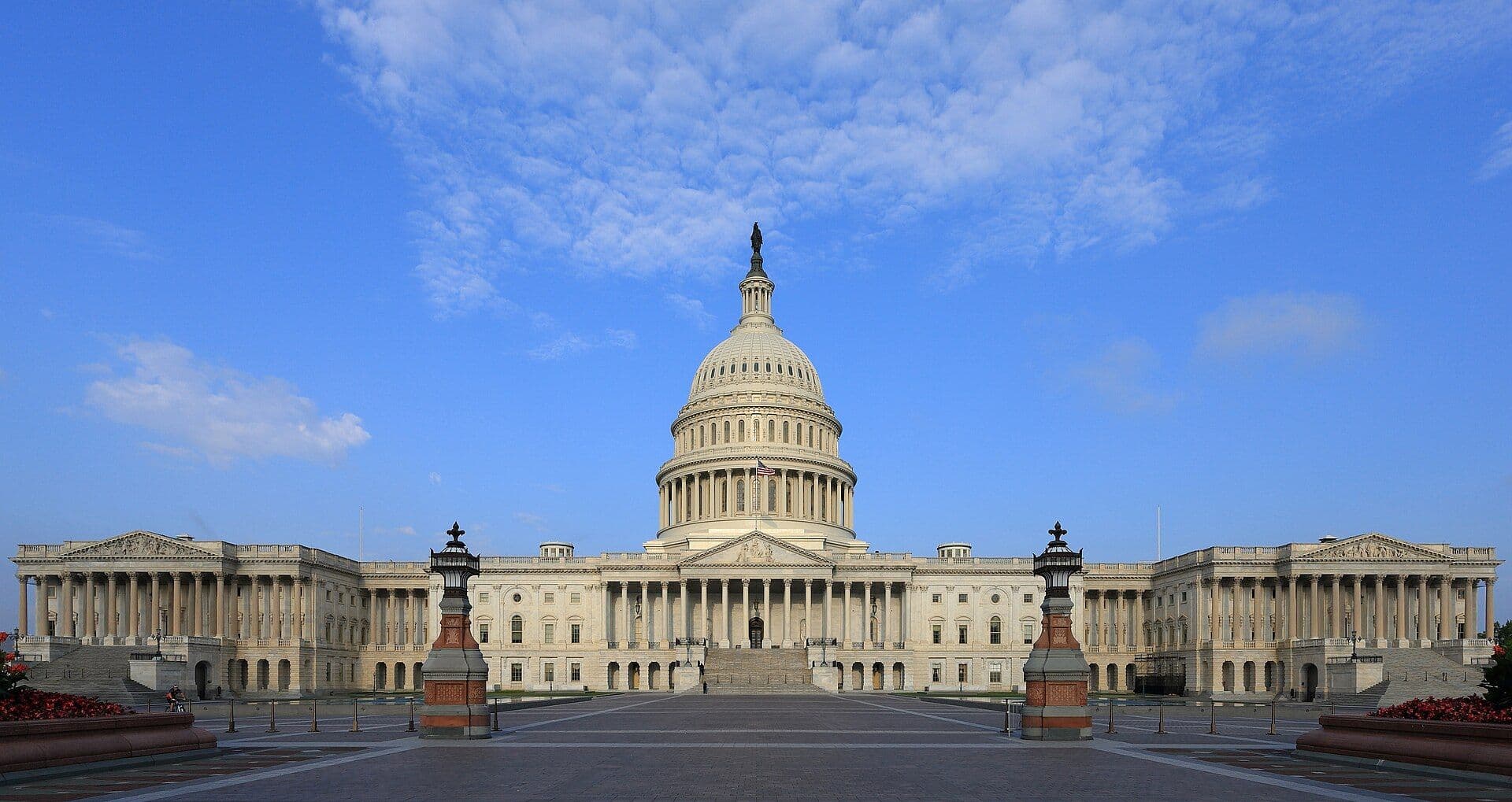
Congress has until December 11 to pass 12 annual spending bills or find another stopgap to keep federal agencies funded. The deadline comes from a short-term measure, H.R. 6500, that the Senate passed 90-6 on August 8, 2026, the House passed 370-48 on September 1, and President Trump signed on September 2. It comes after two shutdowns already disrupted federal operations earlier this year.
None of the 12 full-year fiscal 2027 spending bills has become law. The House has passed three of them on the floor; the Senate has passed none. The main obstacle in the Senate is a disagreement over how much of any spending increase should go to defense versus every other function of government, from housing vouchers to disaster relief, according to the National Low Income Housing Coalition.
A Fiscal Year Already Marked by Three Shutdowns
Fiscal 2026 funding was unusually hard to finish. A deal reached November 9, 2025, following a lengthy shutdown that began that October, produced a continuing resolution plus full-year funding for Veterans Affairs, Agriculture, military construction and the Legislative Branch, according to the Committee for a Responsible Federal Budget. The Defense Appropriations Act for fiscal 2026 followed on February 3, 2026, passing the House 217-214 and the Senate 71-29, with $838.7 billion in discretionary funding, according to the Senate Appropriations Committee.
A separate fight over Department of Homeland Security funding produced two more shutdowns. A brief lapse in early February followed the fatal shooting of a U.S. citizen by Customs and Border Protection agents, and a longer, DHS-specific shutdown ran from February 14 to April 30, 2026. The House approved DHS funding on April 30, ending the shutdown for department employees, though that bill covered only five months of funding rather than a full year, according to Government Executive.
How the Current Stopgap Passed
H.R. 6500, the Continuing Appropriations and Extensions Act, 2027, keeps agencies funded at fiscal 2026 levels through December 11, 2026. It includes targeted provisions covering highway, rail and transit programs, the WIC nutrition program, national security shipbuilding, and the Disaster Relief Fund, according to a statement from Sen. Kevin Cramer's office. It also extends Small Business Administration 7(a) loan program authority, according to the National Association of Government Guaranteed Lenders, and an earlier version approved by the Senate on August 8 delayed a contested Office of Management and Budget rule on federal grants and let public housing authorities redirect unused voucher funds, according to the National Low Income Housing Coalition.
House Appropriations Chair Tom Cole described the measure as "a clean, straightforward measure that keeps the government working," with "no poison pills, no divisive wish lists, and no political gimmicks," according to a House Appropriations Committee statement. The bill buys time; it does not resolve any of the underlying disputes over full-year funding.
The House Is Ahead, the Senate Is Stuck
The House Appropriations Committee approved all 12 fiscal 2027 spending bills by June 30, 2026, according to the American Action Forum. On the floor, the House has passed the Military Construction-Veterans Affairs bill on May 15 and the Agriculture bill on June 4, according to the American Action Forum, and the National Security-State bill on July 15, according to the Committee for a Responsible Federal Budget.
The Senate has not passed any of the 12 bills, and planned markups have been postponed multiple times because appropriators have not agreed on a "302(a) allocation" — the topline figure that divides available funding between defense and nondefense programs, according to the National Low Income Housing Coalition. Until that number is set, Senate appropriators have been reluctant to advance individual bills, since a later change to the topline could force them to reopen measures already drafted.
The Defense-Versus-Nondefense Standoff
The House's fiscal 2027 bills, taken together, propose $1.856 trillion in total discretionary spending, up $217.4 billion, or 13.3%, from fiscal 2026 enacted levels, according to the American Action Forum. Within that total, the House's defense bill totals about $1.072 trillion, up $233.3 billion, or 27.8%, while nondefense spending falls to $784.4 billion, down $15.9 billion, or 2.0%. A separate August 2026 analysis from Breaking Defense put the House Appropriations defense figure at roughly $1 trillion rather than $1.072 trillion; the two figures may reflect different drafts or accounting, and the discrepancy has not been resolved in the sourcing reviewed for this article.
In the Senate, Appropriations Committee Chair Susan Collins and Vice Chair Patty Murray have not reached agreement on the topline. Committee Republicans have pushed for a larger defense increase, while Democrats have called for equal increases to defense and nondefense programs and criticized Republicans for pairing a large defense increase with what they call an inadequate nondefense increase, according to the National Low Income Housing Coalition.
A Reconciliation Request Complicates the Math
Layered on top of the regular appropriations fight is a separate push for mandatory defense funding through budget reconciliation. The Trump administration requested $350 billion in reconciliation funding for the Defense Department for fiscal 2027, but as of August 18, 2026, both the House and Senate budget resolutions included only $60 billion for defense, according to the Center for Strategic and International Studies. The Senate postponed a vote on its budget resolution until after the August recess, and Senate leadership has expressed skepticism about passing a third reconciliation bill before the November midterm elections, per the same analysis.
Separately, the White House submitted an $87.6 billion supplemental funding request in June 2026, with about $70 billion tied to national defense and $67.1 billion specifically for the Defense Department, covering costs the administration attributes to military operations against Iran and to munitions production, according to the Center for Strategic and International Studies. Related war costs stood at $37.5 billion as of July 21, 2026.
What Repeated Stopgaps Cost Contractors and Agencies
The Government Accountability Office has tracked what continuing resolutions do to defense contracts specifically. In a report published January 21, 2026, and reissued with revisions February 4, 2026, GAO found the Defense Department has operated under a continuing resolution in 37 of the last 49 fiscal years. Of 74 acquisition programs GAO surveyed, 36 reported delays in contract awards or equipment delivery tied to continuing resolutions.
GAO cited specific examples: a facilities sustainment contract at Joint Base San Antonio rose from $579,000 to $1,445,000 in fiscal 2024 because of CR-related delays, and the Marine Corps' Amphibious Combat Vehicle program incurred an additional $17.7 million in costs from 2022 through 2024. F-35 program officials estimated that continuing resolutions consume roughly 20% of their financial management staff's time on budget adjustments alone. U.S. Indo-Pacific Command, GAO found, lacked funding in fiscal 2024 to send targets for a joint exercise with the Philippines, forcing the cancellation of one of the exercise's training events. With full-year fiscal 2027 funding still unresolved and a new deadline set for December 11, agencies and their contractors are positioned to face similar disruptions again this fall and winter.