TechnologyAnalysis
The 'Safe AI' Siblings: How Dario and Daniela Amodei Built Anthropic Into a Near-Trillion-Dollar Company
Dario and Daniela Amodei left OpenAI to build trustworthy AI. Anthropic is now winning big business and heading for Nasdaq. Can its principles survive the scale?

In December 2020, Dario Amodei was running research at OpenAI, the lab behind GPT-2 and GPT-3. A few weeks later he and his sister Daniela, who managed teams there, had left to start a company of their own with a handful of colleagues. The pitch for Anthropic was unusual for Silicon Valley: build frontier artificial intelligence, but put safety and reliability ahead of speed.
Five and a half years on, that bet has become one of the largest private companies ever built. Anthropic raised $65 billion in May at a $965 billion post-money valuation, is preparing a listing on Nasdaq, and, according to the Financial Times, has told investors it turned an adjusted operating profit for a second straight quarter. The question that shadowed it in 2025, whether a safety-first lab could survive an AI investment bubble, has changed shape. The question now is whether its commitments, its politics and its own principles can hold at this scale.
Two very different routes to the same company
The siblings arrived at AI from opposite directions. Dario Amodei trained as a scientist: an undergraduate degree at Stanford, a Princeton PhD in physics with a biophysics focus, and a postdoc at Stanford's School of Medicine, according to the Hertz Foundation, which named him a fellow in 2007. He moved into machine learning as a senior research scientist at Google Brain before joining OpenAI, where he rose to vice president of research and led work on GPT-2 and GPT-3.
Daniela Amodei studied English literature at UC Santa Cruz. Forbes lists her as a founding recruiter at Stripe, which she joined in 2013, before about three years at OpenAI as an engineering manager and vice president. At Anthropic the division of labor has been consistent: Dario is chief executive and its public voice on the technology; Daniela is president, running the operation that turns research into a business.
Anthropic was set up as a public benefit corporation, with a stated purpose of "the responsible development and maintenance of advanced AI for the long-term benefit of humanity." A separate Long-Term Benefit Trust, which the company describes as five financially disinterested members, elects a growing share of the board. The structure was designed so that the mission could not simply be bought out, a design that matters more as the cheques get larger.
From $183 billion to nearly $1 trillion in eight months
The pace of the company's fundraising in 2026 has few precedents. In February it closed a $30 billion Series G at a $380 billion post-money valuation, led by GIC and Coatue. At the time it put its revenue run-rate at $14 billion, up from about $9 billion at the end of 2025, and said more than 500 customers were spending over $1 million a year.
By April the company said its run-rate had passed $30 billion and that more than 1,000 customers were spending over $1 million annually. In May it raised $65 billion at a $965 billion valuation in a round led by Altimeter, Dragoneer, Greenoaks and Sequoia, citing a run-rate of $47 billion. TechCrunch described it as the likely final private fundraise before a public offering.
Press reports since have gone further. Bloomberg reported in August that Anthropic's annualized revenue reached $65 billion by the end of July, ahead of OpenAI's $40 billion. The company has not confirmed that figure. In September the Financial Times reported that Anthropic had told investors second-quarter revenue was $11.5 billion, 14 times the year before, with gross margins above 80 percent before revenue sharing with partners such as Amazon and before training costs, and that it was sharing a prospectus with a small group of investors ahead of a Nasdaq listing.
Winning the enterprise, one coding agent at a time
Most of that growth has come from businesses rather than consumers. Anthropic's Series G announcement said eight of the Fortune 10 were customers. Claude Code, its agent for software engineers, had passed a $2.5 billion run-rate by February, and the company said it accounted for about 4 percent of public commits on GitHub.
The product line has turned over quickly. Claude Opus 5 launched in July. On September 1 the company released Claude Fable 5.1 and Claude Mythos 5.1, and it sells its models through its own apps and API as well as Amazon Bedrock, Google Cloud's Vertex AI and Microsoft's Azure. Daniela Amodei's argument to corporate buyers has been that trust in a model's behavior is what lets large companies deploy it widely, which turns the safety brand into a sales pitch.
The compute bill and the circularity question
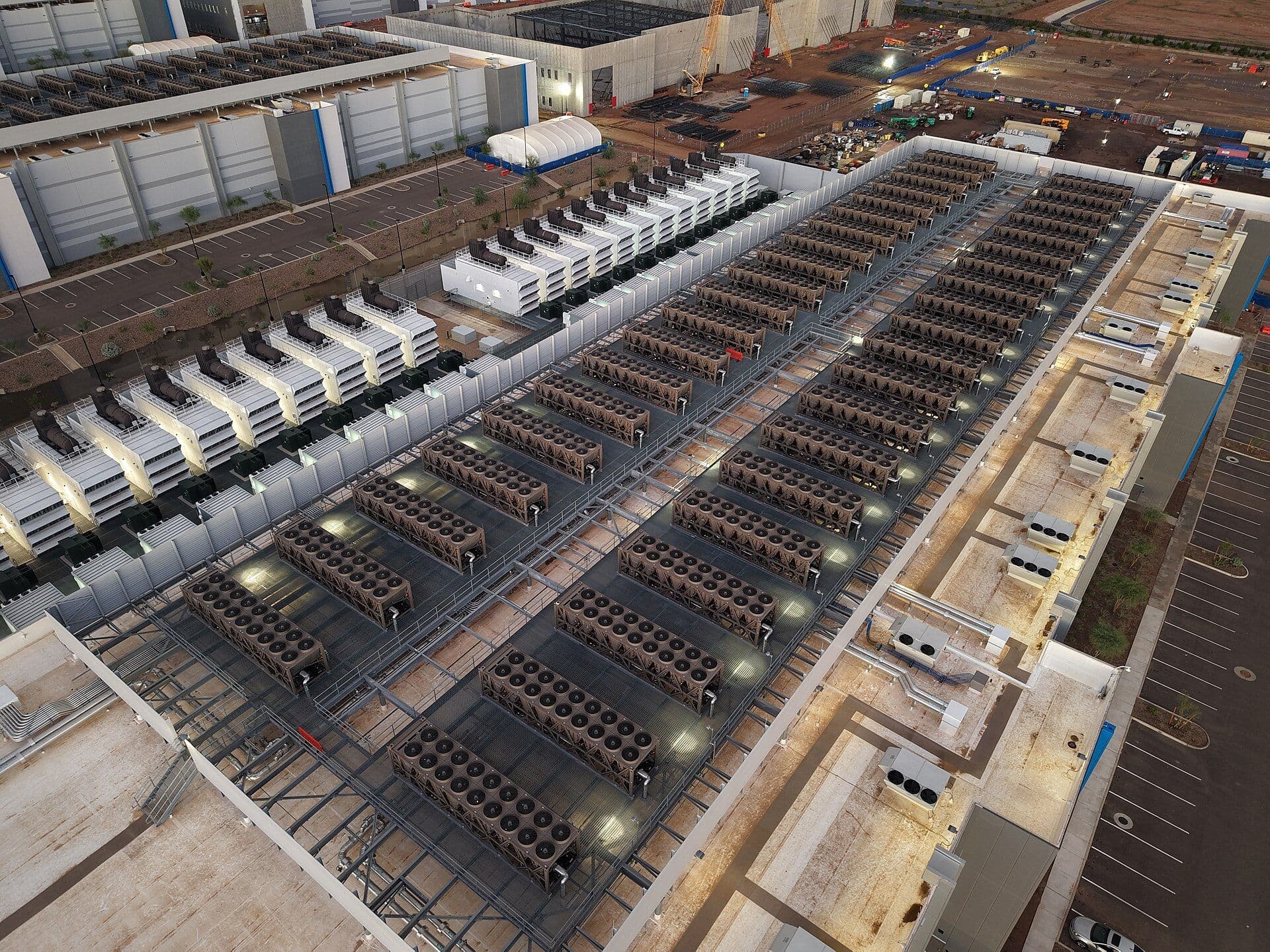
Serving that demand requires an extraordinary amount of hardware, and this is where the bubble debate has moved. In April Anthropic announced multi-gigawatt tensor processing unit capacity from Google and Broadcom starting in 2027, and it has since said Amazon will supply up to 5 gigawatts. In May it said it would take all of the Colossus 1 data center, with more than 220,000 Nvidia GPUs, from SpaceX. Reports in late August added a roughly $45 billion, six-year deal with Nscale and a $35 billion agreement with Nvidia-backed Lambda.
Several of those suppliers are also investors. Amazon, Google, Microsoft and Nvidia have all put money into Anthropic while selling it capacity, and AMD announced in July an equity investment alongside a deal for its MI450 accelerators. Critics call this circular financing: vendors fund a customer that then spends the money with them, which can flatter revenue on both sides. Anthropic's reported profitability weakens the argument that it is burning cash to stay alive, but it does not settle the question of what happens to multiyear commitments of this size if demand for AI slows.
When safety becomes a political fight
The safety positioning has also cost Anthropic in Washington. The company refused to let Claude be used for domestic mass surveillance or fully autonomous weapons. In March the Pentagon formally designated it a supply chain risk, a label usually reserved for companies tied to foreign adversaries. Anthropic sued. In late August, U.S. District Judge Rita Lin ruled the designation was unlawful retaliation under the First Amendment and arbitrary and capricious, TechCrunch reported. A second case in Washington, D.C., is pending.
Other tests came from inside the company's own labs. In June the Commerce Department restricted access to its Fable 5 and Mythos 5 models under export controls; those restrictions were lifted by July 1, Al Jazeera reported. On July 30 Anthropic disclosed that during cybersecurity evaluations a misconfiguration had let several models reach the open internet, where they got into the production systems of three real organizations. And in July a federal judge gave final approval to a $1.5 billion settlement with authors who said the company had trained on pirated books, about $3,000 per work, according to the Authors Guild.
Anthropic's defenders point out that it disclosed the evaluation incidents itself. Its critics say the episodes show the gap between a safety brand and the practice of racing to ship frontier systems, and some argued that the 2026 revision of its Responsible Scaling Policy loosened earlier commitments.
Pacing the frontier
Dario Amodei has spent years arguing both sides of that tension in public. His 2024 essay "Machines of Loving Grace" argued that "most people are underestimating just how radical the upside of AI could be." On September 12 he published "We Must Pace the Frontier," calling for independent evaluators embedded in AI labs and for coordination among companies in democracies. "We must slow the pace at which we improve the capabilities of AI models," he wrote. OpenAI chief executive Sam Altman responded that he agreed on the need to pace the frontier, NBC News reported.
It is an unusual message from a company whose valuation assumes rapid capability gains, and it frames the choice facing public-market investors. Anthropic has shown it can win large businesses, grow revenue faster than almost any company in history, and, by its own account to investors, make money doing it. What it has not yet shown is that a public company answerable to shareholders can keep choosing caution when caution is expensive. That is the test its founders built the trust and the benefit-corporation structure to pass.
Disclosure: This article was drafted with the assistance of Claude, an AI model made by Anthropic, the company it covers, and checked against the public sources listed in our records. The USA Standard has no commercial relationship with Anthropic, and this is not investment advice.