MarketsExplainer
Bond yields carry Fed rate decisions into stock valuations
When the Federal Reserve adjusts interest rates, stock and bond prices shift as investors recalculate the discount rates used in valuation models.
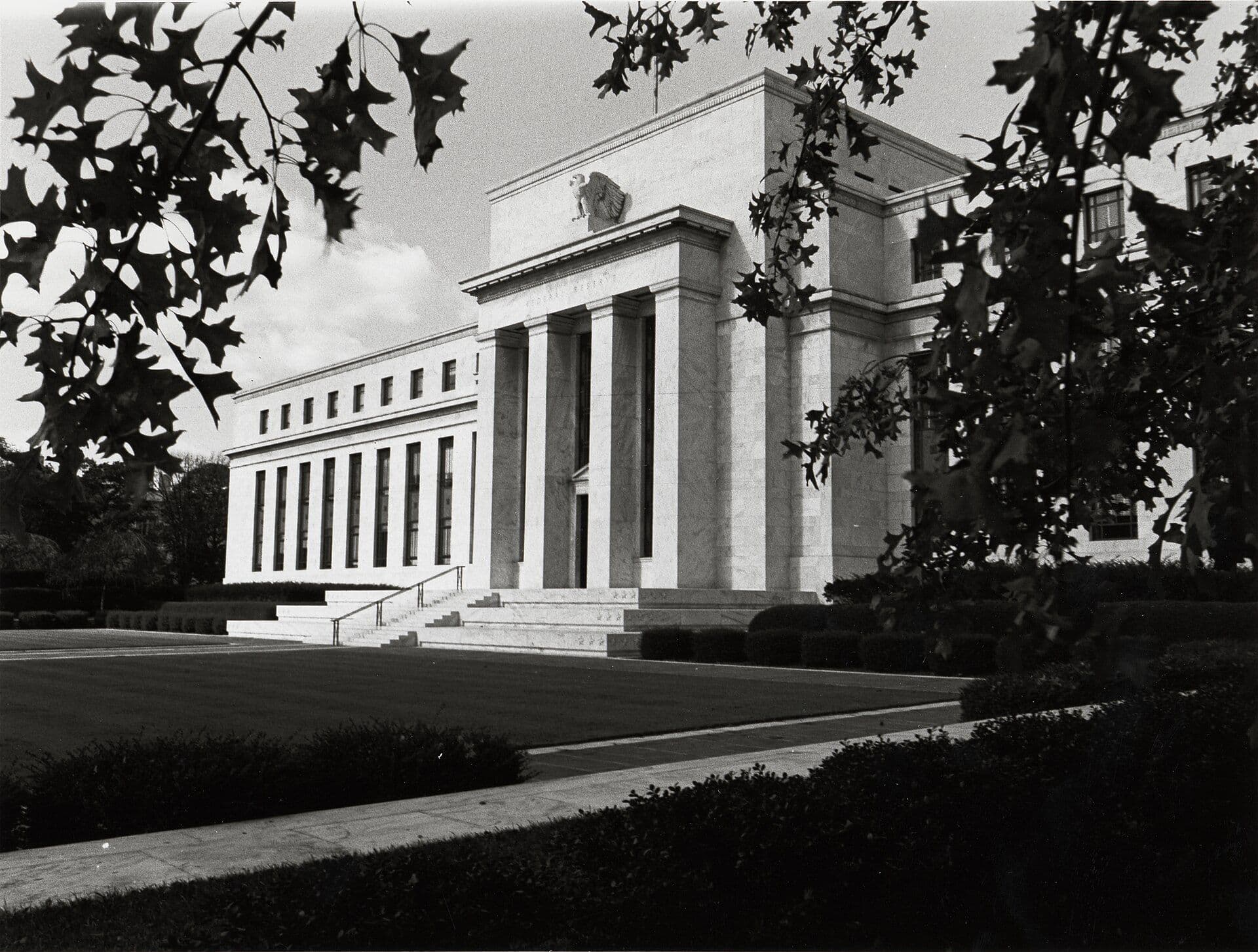
When the Federal Reserve adjusts interest rates, the decision does not reach stock and bond prices instantly or through a single route. Instead, the change propagates through multiple channels over weeks and months: first through expectations about future short-term rates, then through the longer-term interest rates that anchor all investment returns, and finally through the discount rates investors use to value future profits. The mechanism links the Fed's most direct policy tool—the overnight lending rate between banks—to the P/E multiples investors willingly pay for stocks.
Understanding this process matters now because the Fed has held its benchmark rate steady at 3.63 percent as of August 2026, navigating between persistent inflation pressures and economic growth concerns. Inflation expectations feed directly into nominal interest rates, meaning that if the public or markets expect faster price growth, the Fed must either accept higher inflation or raise rates to maintain its 2 percent target. That single Fed rate influences Treasury yields, which in turn reshape the calculus for equity valuations. What happens in the Fed's policy committee room ultimately reaches the price investors pay for stocks.
How the Fed Sets the Foundation Rate
The Federal Reserve does not set interest rates directly across the economy. Instead, it sets a target range for the federal funds rate—the interest rate at which banks lend reserve balances to each other overnight. The Fed maintains this rate through two mechanisms: adjusting the interest it pays banks on reserves they hold at the Fed, and through open market operations that influence the supply and demand for those reserves. This overnight rate is invisible to most borrowers and investors. No mortgage, auto loan, or credit card uses that exact rate. Yet it anchors expectations about what all future short-term rates will be.
As of August 2026, this rate stands at 3.63 percent and has remained stable for four consecutive months, according to Federal Reserve Economic Data (FRED) maintained by the Federal Reserve Bank of St. Louis. The stability itself carries meaning. When markets perceive that the Fed will hold rates steady, they can more confidently price longer-term Treasury yields. When the Fed signals uncertainty or imminent change, volatility in those longer-term yields often follows immediately.
Forward Guidance Shapes Tomorrow's Treasury Yields Today
Central banks learned decades ago that words matter as much as actions. Forward guidance is the tool through which the Federal Reserve communicates its likely future policy direction to influence market expectations of future interest rates. Research shows that approximately 80 percent of annual realized excess stock returns since 1994—when the Fed began announcing policy decisions publicly—occur in the pre-FOMC announcement drift period, indicating that markets price in expected policy moves long before the Fed acts.
When the Fed signals it will hold rates steady or move them higher in the future, financial markets price that expectation into Treasury yields. The 10-year Treasury note yield, which investors follow as a proxy for longer-term macroeconomic conditions, rises when investors expect the Fed to keep rates elevated. The 10-year yield is not set by the Fed but by buyers and sellers of Treasury securities in the open market, yet Fed policy shapes where those yields settle. This transmission happens through the expectations channel: traders know that if the Fed keeps overnight rates high for longer, average short-term rates over the next decade will be higher. The 10-year yield must therefore rise to compensate investors for holding bonds when they could reinvest at higher rates as conditions change.
Inflation Expectations Feed Into the Entire Yield Curve
Inflation expectations are built directly into nominal interest rates. When inflation expectations rise, nominal interest rates typically rise as well, and the Fed often raises its own policy rate to anchor expectations and prevent actual inflation from accelerating. This relationship means that the current Fed rate of 3.63 percent reflects both the real interest rate—the return after inflation—and the market's embedded expectation of future inflation.
The distinction between core inflation and headline inflation matters here. Headline inflation includes all prices, including volatile energy and food categories. Core inflation excludes those volatile categories and better reflects underlying price trends that the Fed targets. When core inflation persists above the Fed's 2 percent target, markets expect the Fed to hold rates higher for longer, which pushes Treasury yields higher across the entire yield curve. Conversely, if core inflation begins falling toward target, markets price in future rate cuts, and yields decline.
How Treasury Yields Become Stock Discount Rates
Stock valuations rest on foundations that begin with Treasury yields. The most basic valuation model expresses a stock's value as the present value of all its future cash flows—earnings, dividends, or free cash flow. Present value represents the value of an expected income stream as of the date of valuation, reflecting the principle that money available today is worth more than the same amount in the future because of interest-earning potential.
The mathematical formula that governs this is straightforward. Investors cannot earn more than Treasury yields without taking risk. So if the 10-year Treasury yields 4 percent, an investor must demand at least 4 percent from a stock just to match Treasury returns, plus additional return for bearing business and market risk. That additional premium—typically 3 to 5 percentage points—compensates for the possibility that earnings might disappoint. When Treasury yields rise, the entire discount rate rises, and stock valuations fall if earnings expectations stay constant.
This works through the dividend discount model, one of the most direct valuation approaches. When the discount rate r increases due to higher Treasury yields, the denominator grows larger, and the stock price P must decline. As Wikipedia notes, 'growth cannot exceed cost of equity,' meaning that when discount rates rise toward expected growth rates, valuations become extremely sensitive to any change in rate assumptions.
Higher Rates Compress P/E Multiples Directly
The relationship between interest rates and price-to-earnings multiples is direct and powerful. When U.S. Treasury bond yields rise, investors pay less for a given amount of earnings per share, and P/E multiples fall. This occurs because rising Treasury yields make fixed-income investments more attractive relative to stocks. Investors respond by demanding higher returns from equities to compensate for their risk, which effectively reduces the valuation multiple they will pay.
Consider a simple example: if a stock earns $5 per share and a P/E multiple of 20 reflects a required 7 percent return, a rise in Treasury yields from 4 percent to 5 percent might raise the required equity return to 8 percent, compressing the justified multiple to 16 or 17. That same $5 in earnings now supports less stock price. The reverse occurs when rates fall. Lower Treasury yields make bonds less competitive, allowing investors to accept lower required equity returns, which supports higher P/E multiples—a powerful driver of stock price appreciation independent of any earnings growth.
The Credit Channel: Investment and Growth Effects
Beyond the discount-rate effect on valuations, monetary policy operates through the credit channel, which affects the cash flows themselves that are being discounted. When the Fed holds rates high, the cost of borrowing for businesses rises across the board. Commercial loans become more expensive. The cost of capital for expansion projects increases. Companies respond by scaling back investment plans that no longer meet a higher hurdle rate of return.
Lower business investment means slower earnings growth across the economy. That reduces not only the discount rate but also the dividends and cash flows being discounted—a double effect on valuations. A company that might have invested in a new production line at a 6 percent cost of capital declines to do so when the cost of capital rises to 8 percent. That forgone investment means fewer new products, less revenue growth, and lower future earnings. The credit channel is powerful because it directly reshapes the earnings expectations that sit in the numerator of every valuation equation, while higher rates simultaneously raise the denominator.
Current Policy Posture and Forward Market Expectations
The Fed's current position—holding rates at 3.63 percent while inflation has shown persistence above the 2 percent target—reflects a deliberate pause in the policy cycle. Markets interpret this pause differently depending on incoming inflation data and economic growth signals. If price pressures ease, markets price in future rate cuts, and Treasury yields fall, which raises stock valuations both by lowering discount rates and by improving growth expectations. If inflation persists or accelerates, markets bet rates will stay higher longer, keeping yields and discount rates elevated.
Stock markets move sharply on inflation reports and Fed communications because each data release reshapes market expectations about where Treasury yields should settle. Research on pre-FOMC announcement drift shows that markets react as soon as expectations shift, without waiting for the Fed to act. That immediate repricing reflects through to the discount rates used in every equity valuation. The transmission from Fed policy to stock prices is not mechanical or instant, but it is relentless: Fed policy shapes inflation expectations, which shape Treasury yields, which shape discount rates, which reshape the present value of every future corporate cash flow.