PolicyExplainer
Fed opens comment on capital and redemption rules for bank stablecoins
The Fed opens public comment on how banks can issue stablecoins backed by Treasury securities and cash. The rules create a formal pathway to market entry but impose strict operational constraints.
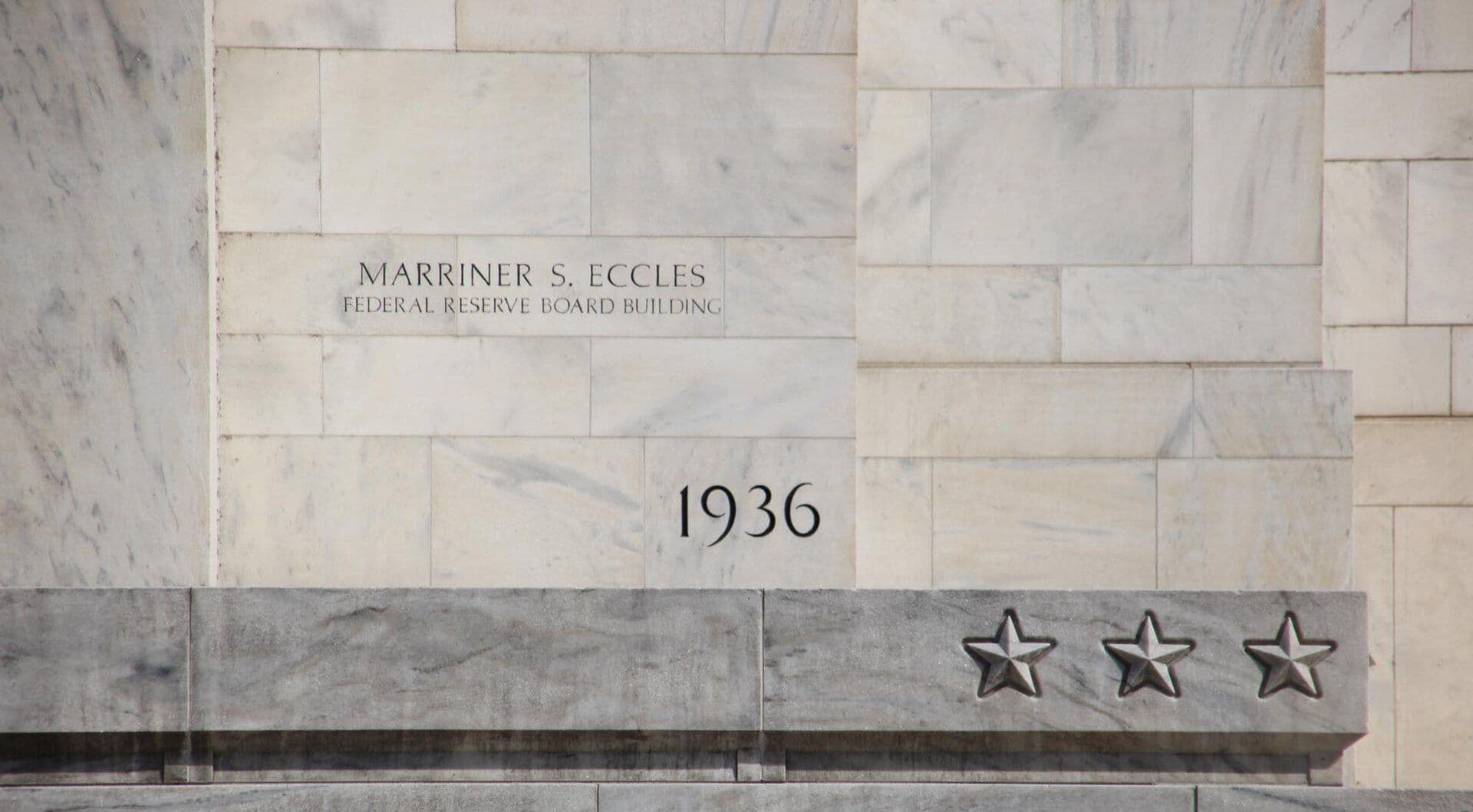
The Federal Reserve on September 24, 2026, opened public comment on two proposals to regulate payment stablecoin issuers under the GENIUS Act, which President Trump signed into law in July 2025. The framework establishes operational and financial requirements for banks seeking to issue stablecoins backed by Treasury securities and cash. For the first time, the Fed is spelling out what capital banks must hold against stablecoin operations, how quickly they must process redemptions, and what happens if reserves fall below required levels.
Understanding these rules matters for regulated banks entering the market and for fintechs considering stablecoin partnerships, since the requirements determine operational costs, redemption speed, which revenue models survive regulatory scrutiny, and ultimately which institutions can compete in digital payments. The two proposals move stablecoin regulation from principles to measurable operational standards.
What the GENIUS Act established
The GENIUS Act, signed into law on July 18, 2025, created the first federal framework for 'payment stablecoins'—digital tokens pegged to the U.S. dollar and used primarily for payments rather than investment. The law requires issuers to back each stablecoin dollar with a dollar's worth of specified assets: cash, bank deposits at insured or regulated institutions, short-term U.S. Treasury securities, Treasury-backed reverse repurchase agreements, and money market funds.
No other assets may be held as reserves. Issuers must publish the composition of their reserves monthly on their websites and certify them with executive signatures. Those with more than $50 billion in outstanding stablecoins must also publish annual audited financial statements. In bankruptcy, stablecoin holders receive priority over all other creditors for repayment from reserve assets. The law also explicitly forbids paying interest or yield on stablecoins—a restriction that closes one common revenue model in cryptocurrency markets but ensures the tokens function as payment instruments rather than yield-bearing investments.
The Fed's reserve and capital requirements
The Federal Reserve's first proposal requires stablecoin issuers to maintain full one-to-one reserve backing while establishing a tiered capital structure to absorb losses from operational and credit risks. The proposal mandates an operational-risk capital charge of 2 percent on the first $20 billion in stablecoins outstanding, 1.5 percent on the next $30 billion, and 1 percent on amounts exceeding $50 billion. This tiered structure means a bank issuing $30 billion in stablecoins would hold capital equal to 2 percent of $20 billion plus 1.5 percent of $10 billion—a total of $550 million in capital set aside. A bank issuing $100 billion would hold capital equal to 2 percent of $20 billion, 1.5 percent of $30 billion, and 1 percent of $50 billion—totaling $1.35 billion.
Reserve assets themselves must be segregated and not commingled with a bank's operational funds. If reserves fall below the required one-to-one level, the issuer must notify the Federal Reserve and either restore reserves through a remediation plan or liquidate and redeem all outstanding stablecoins. The proposal also covers custody and safekeeping standards for the financial institutions holding the actual reserves, extending regulatory requirements to depository institutions and custodians that support the ecosystem.
Federal Reserve Governor Michael Barr stated that "stablecoins will only be stable if they can be reliably and promptly redeemed at par in a range of conditions," including during market stress and "during episodes of strain on the individual issuer or its related entities." The capital requirements and reserve rules are designed to ensure this remains true even during financial stress, when redemption requests may spike.
Redemption timelines and operational requirements
The Fed's first proposal requires issuers to process redemptions within two business days. This requirement ensures stablecoins remain liquid and usable, meeting the expectation that holders can convert them back to dollars on demand. The proposal mandates that redemption procedures be 'clear and conspicuous' to users, with any limitations imposed only by applicable state or federal payment stablecoin regulators.
Monthly reporting forms the backbone of transparency. Issuers must publish reports detailing the total stablecoins outstanding and the value and composition of reserves—cash, deposits, Treasury securities, and other eligible assets. These reports must be examined by a registered public accounting firm and certified by the issuer's chief executive officer and chief financial officer. The certification requirement creates personal accountability for accuracy.
The application process for banks
The Federal Reserve's second proposal establishes the application process for board-supervised banks seeking to issue stablecoins. Banks must establish a subsidiary to serve as the actual issuer—they cannot issue stablecoins directly. The application requires submission of a business plan, financial information, relevant policies, procedures, and 'other documents' the Fed may request. The Fed does not enumerate all required documents in the proposal, leaving flexibility to demand additional information as applicant quality or market conditions warrant.
The proposal includes procedures for applicants to request a hearing, for the Fed to hold one, and for appeals of denial decisions.
Restrictions on yield and implications for fintechs
The GENIUS Act's prohibition on interest or yield to stablecoin holders eliminates a key fintech business model: earning money by paying users a small yield on stablecoins they hold. The Fed's proposal reinforces this by noting that 'certain types of arrangements involving third parties would be presumed to be prohibited payments of interest or yield.' The proposal does not enumerate all prohibited arrangements but suggests only narrow exceptions similar to credit-card incentive programs would survive.
This restriction affects platforms and fintechs that use stablecoins. If a fintech cannot offer yield on stablecoins, it must find alternative revenue models: charging fees for transactions, offering premium services, or building other financial products. The restriction also affects any bank partnering with a fintech. A bank-issued stablecoin circulating through a fintech platform cannot offer yield to users of that platform without violating the framework.
Fintechs partnering with bank-supervised stablecoin issuers inherit the operational requirements too. If a fintech holds stablecoins that it received from an issuer, it must comply with custody and safekeeping standards if it physically holds reserves. The framework creates compliance responsibilities throughout the distribution chain.
The public comment process and regulatory coordination
The Federal Reserve will accept public comment for 60 days after publication in the Federal Register. Comments can come from banks, fintech firms, stablecoin platforms, investors, consumer advocacy groups, and members of the public. Large issuers may flag that capital requirements are too high or impractical; smaller banks may argue that custody requirements create excessive cost; fintechs may submit data showing how yield restrictions damage their business models.
The Fed's staff reviews all comments and prepares a response memo for the Board of Governors. The Board decides whether to revise the proposals before issuing final regulations. This process usually takes several months after the comment period closes, sometimes much longer.
The Fed is not the only regulator implementing the GENIUS Act. Bank subsidiaries that issue stablecoins are supervised by their primary federal banking regulator, federally licensed nonbank issuers fall under the Office of the Comptroller of the Currency, and smaller issuers may opt into state-level regulation instead. Each regulator has issued or is preparing parallel rules. How these regulators coordinate will become clear only after all agencies finalize their rules. The proposal does not address interagency coordination, creating potential gaps or conflicts once implementation begins.
Market entry hurdles and alternatives for banks
The framework creates a formal pathway but imposes real costs. A bank seeking to issue stablecoins must hire compliance staff, establish subsidiary governance, conduct regular audits, and hold capital that could otherwise fund other business activities. A large bank issuing $50 billion in stablecoins would hold $850 million in capital against those assets alone. Smaller banks may find the compliance burden prohibitive for any issuance below several hundred million dollars.
Banks have an alternative: issue tokenized deposits—digital representations of traditional bank deposits that inherit FDIC deposit insurance and can offer interest. Tokenized deposits follow existing bank holding company regulations and do not require a new regulatory pathway under the GENIUS Act. A bank can issue tokenized deposits today using existing banking law frameworks; stablecoins require the Fed's approval. For a bank seeking to offer digital payments without regulatory complexity, tokenized deposits may be the faster route.
The capital requirements and operational complexity also affect market structure. Banks with existing regulatory relationships, compliance infrastructure, and technical expertise will find entry easier than de novo fintech firms. Established financial institutions may monopolize stablecoin issuance, while smaller fintechs are relegated to distribution and partnership roles. The GENIUS Act created a federal framework, but the Fed's implementation rules may determine whether stablecoin issuance remains competitive or concentrates among a few large banks.
Related coverage: Federal Agencies Must Navigate Public Comments, Cost Reviews Before Writing Business Rules; How a Federal Rule Is Made, and Where It Can Be Stopped.