TechnologyExplainer
How data center location choices shape cloud computing economics
Power availability, cooling capacity, proximity to users and regulatory requirements increasingly determine where cloud infrastructure gets built—and what companies end up paying to use it.

Where a cloud provider builds its data centers is no longer a peripheral business decision. Location choices now drive the fundamental economics of cloud computing: the power available to operate servers, the cost to cool them, the latency customers experience, and the final price on monthly bills.
A data center built in a region with abundant power and lower labor costs operates at a different cost structure than one built 500 miles away. Cloud providers price their services regionally, passing along these location-based expenses. For businesses running workloads across multiple regions, understanding the geography behind cloud pricing—and its constraints—has become essential to controlling costs and application performance.
Power: The Primary Constraint
Power availability has replaced land cost as the dominant factor in data center site selection. According to JLL's 2026 Global Data Center Market Outlook, 'speed to power is the primary criteria driving site selection, followed by community support, latency and proximity to customers.' Developers now prioritize locations where they can secure grid interconnection quickly rather than cheaper real estate.
Grid connection delays have become severe. In primary markets across North America and Europe, interconnection queues now exceed four years, leaving developers unable to access existing power infrastructure at any timeline. This constraint has triggered a fundamental shift toward behind-the-meter power solutions: on-site generation, battery storage, and private transmission systems.
Construction costs reflect this power-first strategy. JLL forecasts average global data center construction costs of $11.3 million per megawatt (MW) in 2026, up from $10.7 million in 2025. Proximity to existing power infrastructure can outweigh land price because it shortens interconnection scope and reduces utility upgrade risk. In jurisdictions like Ireland and Texas, 'bring your own power' mandates now require developers to fund their own energy generation, making power infrastructure decisions outcome-determinative for project viability.
Cooling at Extreme Density
The rise of AI workloads has transformed cooling from a routine operational concern into a critical site selection criterion.
Liquid cooling has shifted from an experimental option to an operational necessity. CoreSite's 2026 analysis notes that modular liquid cooling units now start at 2 megawatts, with two-phase direct-to-chip solutions expected to be announced in 2026. This infrastructure requires significant capital investment and ongoing operational expertise, pushing cooling responsibility to the forefront of site selection decisions.
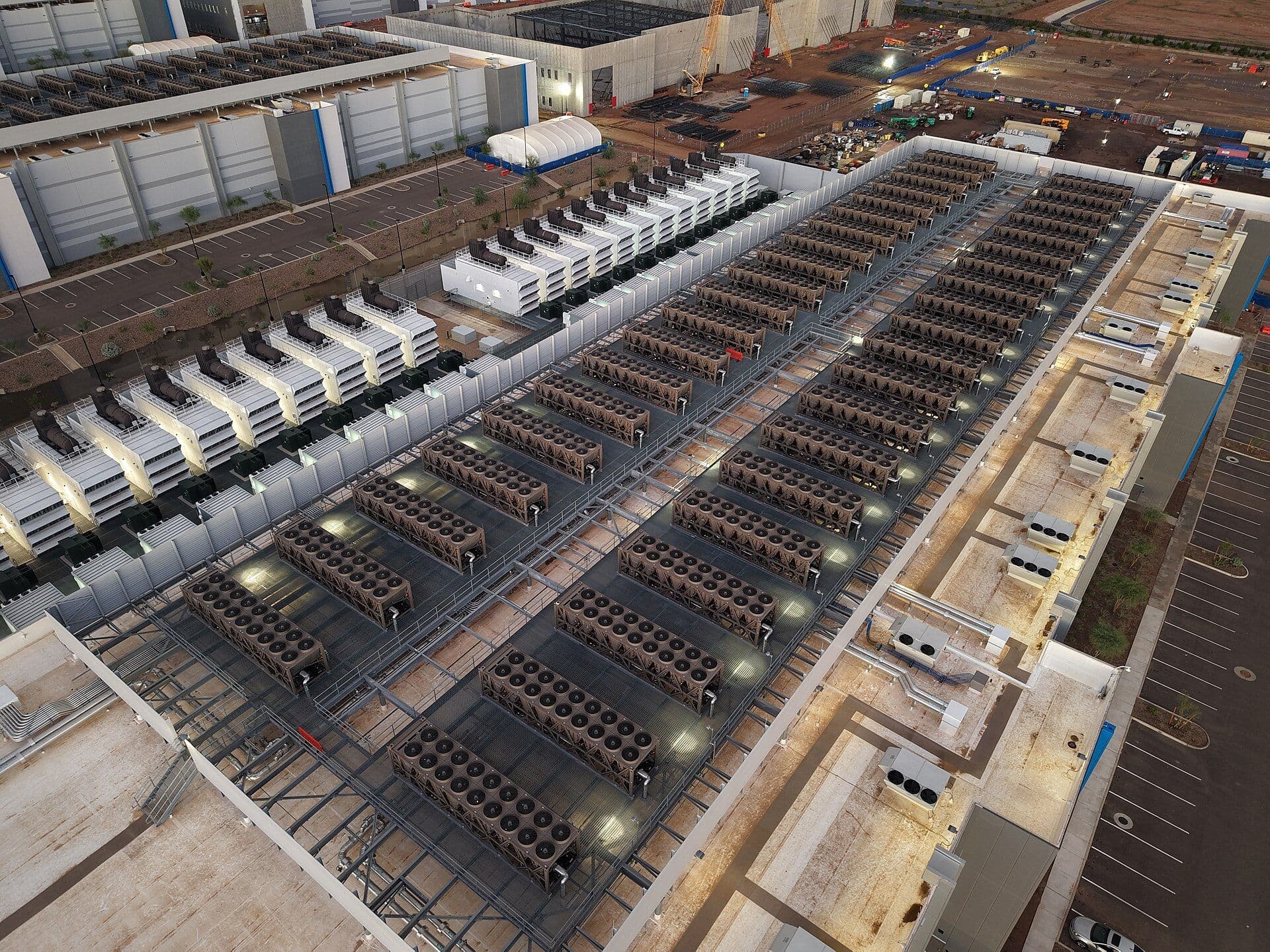
Geography matters for cooling economics. Free cooling—drawing cool outside air into circulation systems—is a cost-effective thermal management approach that only works in certain climates. Regions with moderate annual temperatures, abundant water for cooling systems, and grid capacity to handle the thermal loads become strategically valuable. Location climate directly determines whether a facility can rely on passive cooling or must deploy expensive liquid systems year-round.
Latency and the Edge Premium
Proximity to users creates hard latency boundaries based on physics. Fiber optic signals travel at roughly 124 miles per millisecond. A user 50 miles from an edge data center experiences approximately 1-2 milliseconds of latency, compared to 20-50 milliseconds to distant cloud regions. For time-sensitive applications—algorithmic trading, autonomous systems, real-time AI inference—these milliseconds matter financially.
These performance advantages translate into tangible business outcomes: faster checkout conversions, improved customer retention, and operational safety margins that justify infrastructure investment.
Edge location economics create pricing premiums. Mid-country hubs like Kansas City, positioned roughly 1,000 miles from Los Angeles and 1,200 miles from New York, serve national audiences with balanced latency to both coasts. Power costs in mid-country markets typically run 20 to 30 percent below coastal markets, and real estate costs follow similar patterns. However, users willing to pay for latency-sensitive workloads accept higher pricing from edge facilities closer to their operations.
Regional Cost Variations in Electricity and Labor
Electricity costs vary dramatically by region and directly determine operational expenses. Electricity accounts for 20 to 30 percent of a data center's total operating expenses. Electricity costs in high-density regions have risen as AI deployment concentrates demand, driving higher and more volatile operating costs.
Labor scarcity is reshaping regional economics. Workers are relocating from markets like Arizona to booming regions like Dallas, increasing wages, per diem costs, and relocation expenses. JLL estimates labor and equipment shortages push construction costs up roughly 6 percent year-over-year.
Tax policy affects location decisions. Several states—including Georgia, Indiana, Oklahoma, and Washington—have eliminated or restricted data center tax benefits, fundamentally altering project economics. A market with cheaper land but limited skilled trade capacity may underperform a more expensive market with deeper labor supply, making workforce availability as outcome-determinative as power access.
Regulatory Environment and Community Constraints
Political and regulatory landscapes now define whether projects proceed. According to Nixon Peabody's 2026 site selection analysis, more than 140 local community groups actively oppose or delay data center projects. Developers require what the firm calls a 'social license to operate'—transparency, community benefit agreements, and earned local acceptance. Over a dozen states have proposed moratoria or restrictions on data center development.
Water rights and environmental permitting have become outcome-determinative in certain jurisdictions. Florida's recent framework demonstrates water availability as a site selection constraint, particularly for large-scale cooling operations. EMEA regions benefit from renewable energy integration opportunities, where projects combining renewables and private transmission can reduce tenant power costs by 40 percent versus traditional grid connections in EMEA regions. These regulatory pathways are location-specific and influence total cost structures for years.
The convergence of power availability, construction costs, energy self-sufficiency requirements, and community support has transformed data center site selection into a multi-year negotiation. A location offering cheap land but scarce power, no community support, and difficult water permitting becomes economically unviable regardless of price. Cloud providers must evaluate regulatory durability alongside infrastructure capacity when selecting sites, and those cost tradeoffs ultimately flow through to regional cloud pricing.
How Location Economics Reach Cloud Pricing
Cloud providers price services regionally, reflecting location-based infrastructure costs. Cloud computing pricing varies significantly by region, with some services like data egress fees differing substantially across locations. U.S.-based regions like Northern Virginia, Oregon, and Iowa typically offer lower rates than international locations due to infrastructure density and grid availability. In Asia-Pacific regions, competing providers offer substantially different pricing based on local power costs and labor expenses.
Beyond base instance pricing, egress fees—charges for moving data out of the cloud—can differ by up to 7 times across regions and represent the cost organizations most commonly underestimate. Colocation pricing, reflecting the cost to operate physical infrastructure, has risen alongside data center construction expenses. For 2026, JLL forecasts total data center investment needed globally by 2030 will reach $3 trillion. These infrastructure costs distribute unequally: regions with power scarcity, high labor costs, or restrictive regulation pass higher expenses to customers.
For businesses deploying workloads across multiple regions, understanding location economics is essential. A stable, high-utilization workload might be cheaper to run in colocation than cloud over a five-to-seven year horizon, but only if located in a region with favorable power, labor, and regulatory conditions. Conversely, time-sensitive applications justify premium pricing for edge locations closer to users. Location choices made by cloud providers today become the cost structures and performance guarantees that businesses navigate for years.